
Blog
Where Is Comme des Garçons Made?

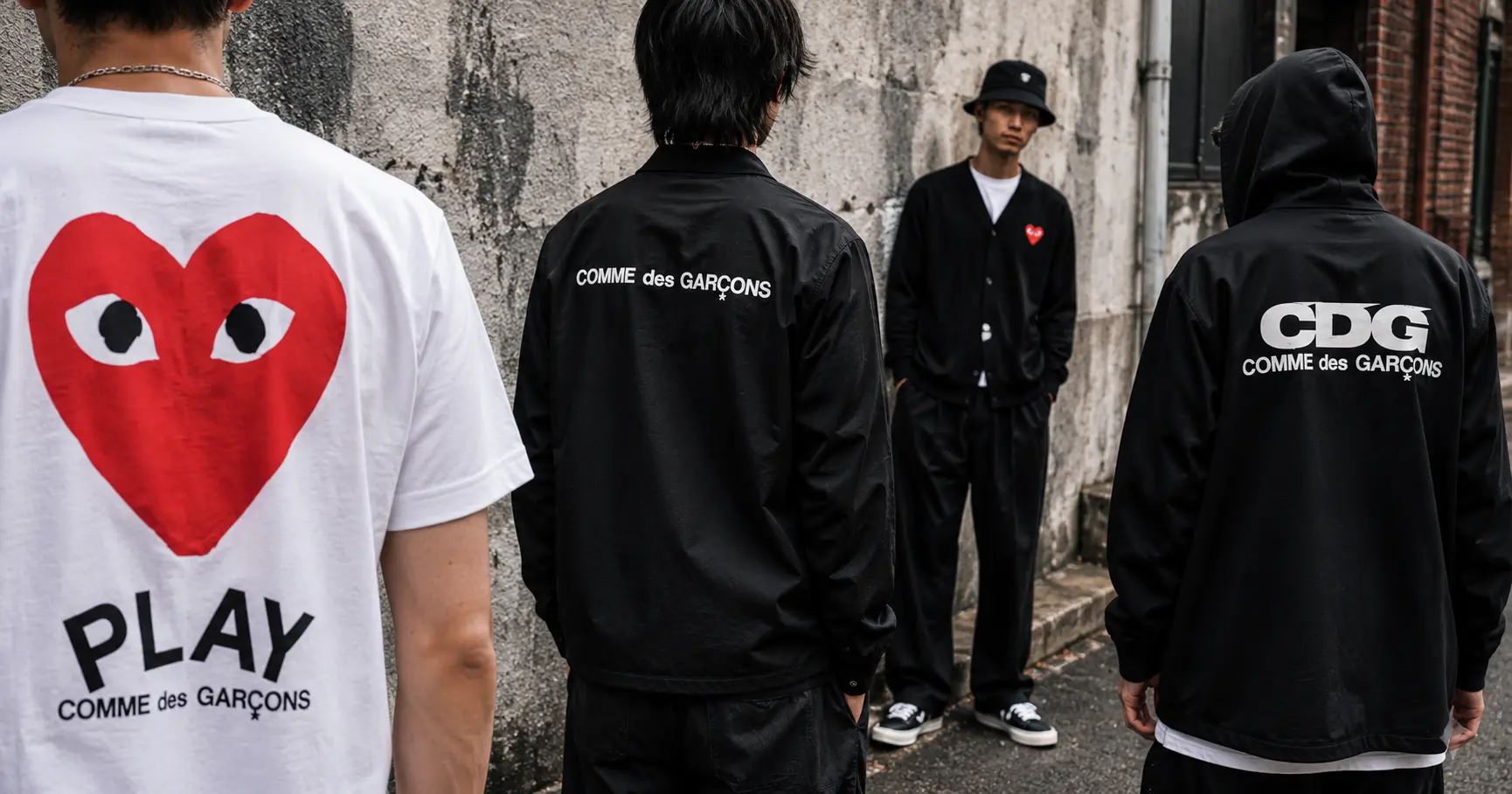
Most Comme des Garçons garments are manufactured in Japan, with Tokyo serving as the creative and production hub under Rei Kawakubo’s direct oversight. However, depending on the specific line and product category, pieces are also produced in France, Italy, Portugal, and select factories in Eastern Europe and the label matters more than most buyers realize.
Japan First, But It’s Complicated
Comme des Garçons operates more than a dozen distinct sub-labels, each with its own supply chain. The flagship Comme des Garçons collection and Comme des Garçons HOMME PLUS are mostly made in Japan. More accessible drops, including Comme des Garçons PLAY and Comme des Garçons Shirt, source production from Portugal, Eastern Europe, and occasionally China, depending on the season and piece.
The “Made in” label by line (2025–2026 reference):
| Line | Primary Country of Manufacture | Price Tier |
| Comme des Garçons (Main Line) | Japan | $$$$ |
| COMME des GARÇONS HOMME PLUS | Japan | $$$$ |
| COMME des GARÇONS HOMME | Japan / Portugal | $$$ |
| Comme des Garçons SHIRT | Portugal / Japan | $$$ |
| Comme des Garçons PLAY | Portugal / China | $$ |
| BLACK COMME des GARÇONS | Japan | $$$ |
| CDG (Dover Street Market house brand) | Portugal / Italy | $$ |
| Junya Watanabe (under CdG umbrella) | Japan | $$$$ |
Why Japan Dominates the High-End Lines
Rei Kawakubo founded the brand in Tokyo in 1969 and has maintained manufacturing relationships with Japanese ateliers for over five decades. The main runway collections are cut and sewn in facilities in and around Tokyo, where Kawakubo exercises unusually close control over finishing and construction.
Japanese factories offer unique, high-level skills that perfectly match the CdG aesthetic. Here is why it matters:
- Precision in asymmetrical construction: Japanese pattern-cutting traditions align directly with the brand’s deconstruction aesthetic.
- Access to proprietary technical fabrics: CdG frequently works with Japanese mills for textiles unavailable elsewhere in the world.
- Long-term atelier relationships: The brand’s Tokyo suppliers carry decades of deep expertise in executing unconventional silhouettes.
 PLAY vs. Main Line: The Production Gap That Affects Resale Value
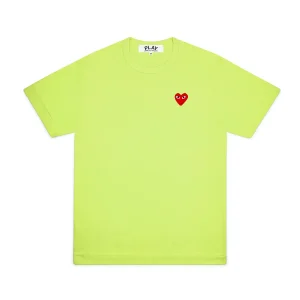
Comme des Garçons PLAY, the famous heart-logo line you see everywhere in the US, is mostly made in Portugal or China. It’s a solid tee for $150, but let’s be real: it’s in a completely different league compared to a $1,200 HOMME PLUS jacket hand-stitched in a Tokyo atelier.
When authenticating CdG PLAY pieces on the US resale market:
- Legitimate Portugal-made PLAY pieces have clean, consistent stitching on the heart logo patch
- Counterfeit CdG PLAY is extremely common in the US. It’s the most faked line in the brand’s portfolio
- Check the wash tag: authentic pieces read “Made in Portugal” or “Made in China” in consistent CdG font weight and formatting
How to Read a Comme des Garçons Care Label
The interior label system is the fastest way to verify authenticity and understand provenance. Legitimate Comme des Garçons garments follow a consistent label architecture:
Main label: Shows the specific sub-line name (e.g., “COMME des GARÇONS SHIRT”) in the brand’s proprietary typography. Spacing, capitalization, and font weight are precise and consistent across seasons.
Care/wash label: Lists country of manufacture, fiber content, and care symbols. On Japanese-made pieces, this tag is bilingual (Japanese/English). Portuguese-made pieces show English/Portuguese.
Season code: Higher-end lines include an alphanumeric code sewn into the main label (e.g., “AD2025” for the year). This identifier is absent on PLAY basics and is a strong authenticity signal on main-line and HOMME pieces.
The Dover Street Market Effect on US Access
In the US, Dover Street Market New York (160 Lexington Avenue, Manhattan) is the primary authorized retailer for the full Comme des Garçons collection, including rare runway pieces that don’t reach other stockists. DSM’s in-house CDG brand, a separate entity from the main label, is produced primarily in Portugal and Italy and retails at lower price points, which creates confusion for newer buyers.
Most US consumers’ first Comme des Garçons purchase is a PLAY tee from DSM or an authorized online retailer like END or SSENSE, meaning most Americans are buying Portuguese-made product, not the Japanese-manufactured flagship most associated with the brand’s critical reputation.
What “Made in Japan” Signals in 2026
Japan’s apparel manufacturing has strengthened its premium positioning since the supply chain disruptions of 2020–2023. Factories producing for Comme des Garçons, Yohji Yamamoto, and Issey Miyake have maintained their artisanal workforce in ways many European and Chinese manufacturers haven’t matched at scale.
For Comme des Garçons specifically in the current resale climate:
- Japanese-made main line and HOMME pieces hold resale value more reliably than diffusion line equivalents.
- The seam finishing difference between Japanese-made CdG and Portuguese-made CdG is obvious to the touch, not a deficiency in Portuguese production, but a labor-intensity distinction.
- Archival CdG from the 1980s–1990s Japanese production is aggressively sought and priced on Grailed and Yahoo Japan Auctions, regularly fetching multiples of original retail.
 Quick-Reference: What US Buyers Need to Know
- Buying PLAY at retail? Portugal or China manufacturing is standard and legitimate; don’t let it deter you.
- Buying main line or HOMME PLUS? Japan on the care tag is the baseline expectation. A seller who can’t show the label is a red flag.
- Authenticating resale? Label language, font consistency, and season coding are more reliable verification points than logo inspection alone.
- Investing in archival pieces? Japanese-made construction is both a quality indicator and a stronger resale position.
Comme des Garçons‘ manufacturing geography maps directly onto its product hierarchy. Knowing which factories serve which lines is the most practical tool for buying intentionally and avoiding diffusion-line pricing on main-line expectations.