
Blog
Comme des Garçons — Fashion Has No Meaning Here. That Is the Point.

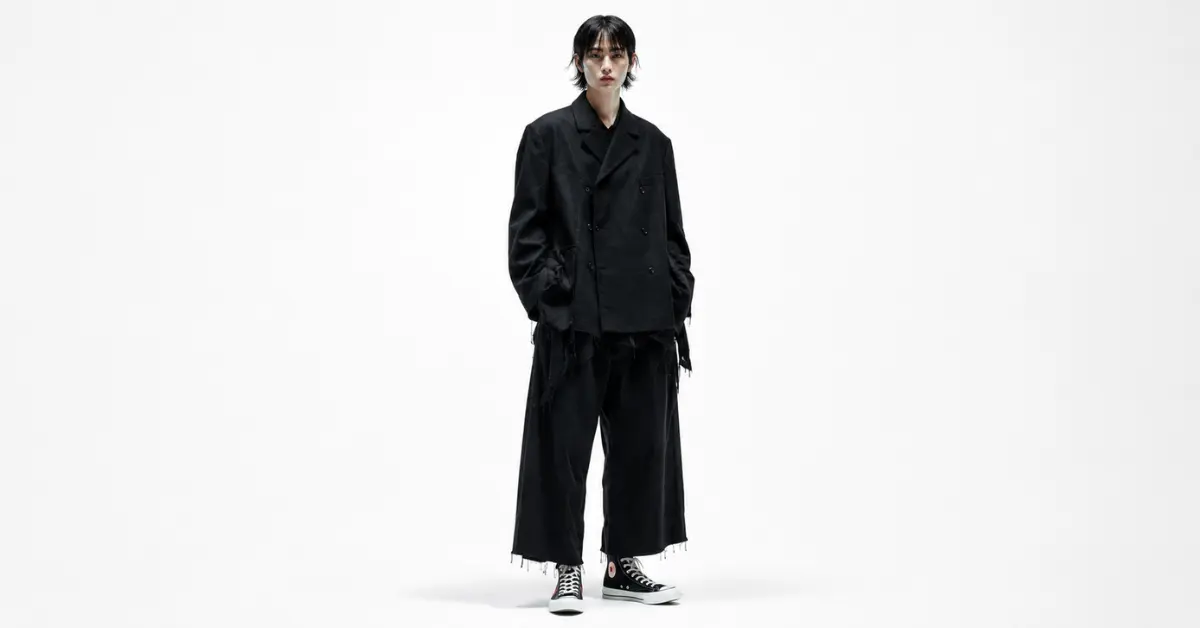
Let’s be real.
The majority of fashion brands desire that you look great. Comme des Garçons hopes you will think. It’s two totally different objectives — and Rei Kawakubo has been relentlessly pursuing the latter since 1969.
This is a brand that doesn’t follow the trends or drop a limited edition product just to make a lot of hype. It constructs something larger than this. A philosophy. A position. A motivation to think about the things you can wear that aren’t merely for their appearance in a picture.
So, if you’re ready to dive into the world of CDG, here’s all you need to know about it as it stands in 2026, its origins and why it continues to be a favorite of streetwear and luxury fashion.
What “Comme des Garçons” Actually Means
The name comes from French and translates directly to “like boys.”
It was taken from a 1962 song by Kawakubo, called “Françoise Hardy”. She picked it on purpose — as an insult to the notion that women should dress to please, polish or fit into a preconceived mold of any kind.
Japan is a brand that is all Japanese. Founded in Tokyo. Keep on running from Tokyo. The first contradiction Kawakubo created for the brand is on a Japanese label and is French.
It’s a surefire sign of how she thinks!
The Founder Who Never Studied Fashion
Rei Kawakubo was born in Tokyo in 1942.
She went to Keio University to study fine arts and literature. No pattern cutting. No garment construction. No conventions were handed down from teacher to teacher inside any design classroom.
She worked in an advertising firm for a textile company. Turned into a stylist on a freelance basis. In 1969 began to produce clothes in the name of Comme des Garçons. Established the brand officially in 1973 and the first boutique in 1975.
A lack of formal education wasn’t a problem for her. It helped her to break free from the rules that people have been learning to follow for years. It was that freedom which would drive all the things that CDG would ever produce.
Paris, 1981 — The Show Nobody Was Ready For
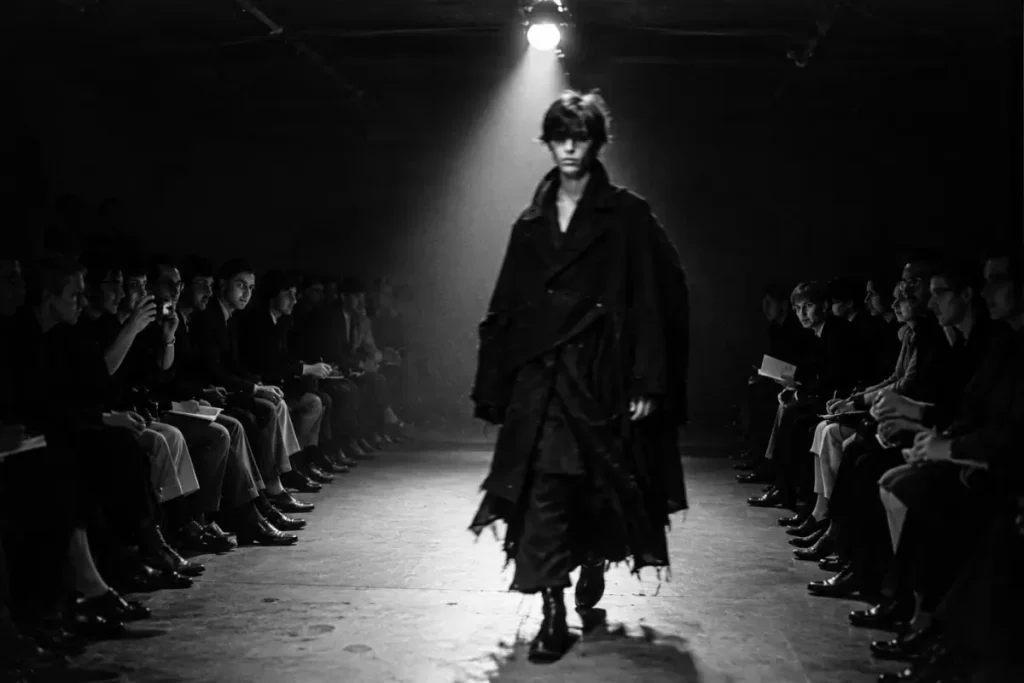
In 1981, Paris Fashion Week wasn’t ready for CDG.
In 1981, high fashion included hyper-glamorous Versace designs and power suits with wide shoulders from Mugler. With a bunch of distressed fabrics, raw seams, cut-out shapes, and practically all black. Its critics referred to it as “Hiroshima Chic”. It was sometimes referred to as ‘poverty clothing’.
The world had to wait, as with all real visionaries — time.
This fashion show has since become a turning point in fashion. After this day, “avant-garde” became synonymous with Rei Kawakubo. All of the over-the-shoulder fits, the unfinished bottoms and the genderless models come from the questions she asked on that runway.
Black Is Not a Color Here. It Is a Statement.
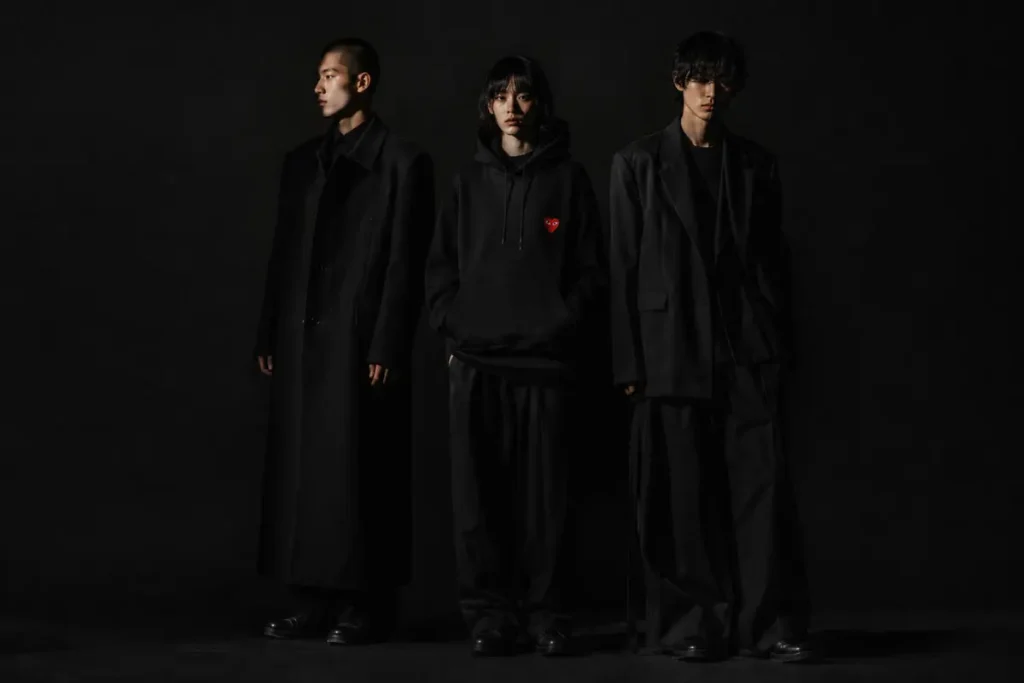
Black is my colour, Kawakubo said. It’s simply the most powerful, the most honest for creation and the color that carries the rebellious spirit — and holds the deepest meaning: the universe and the black hole.
Most brands have black as their default colour. Safe. Commercial. Goes with everything.
Kawakubo employs it in a statement. This new idea in Japan generated a fashion craze, with youth parading the streets in black all the way from head to foot. It’s never been about minimalism, in the all black palette. It was a tale of resistance.
The SS26 Collection — Finding Beauty in Damage
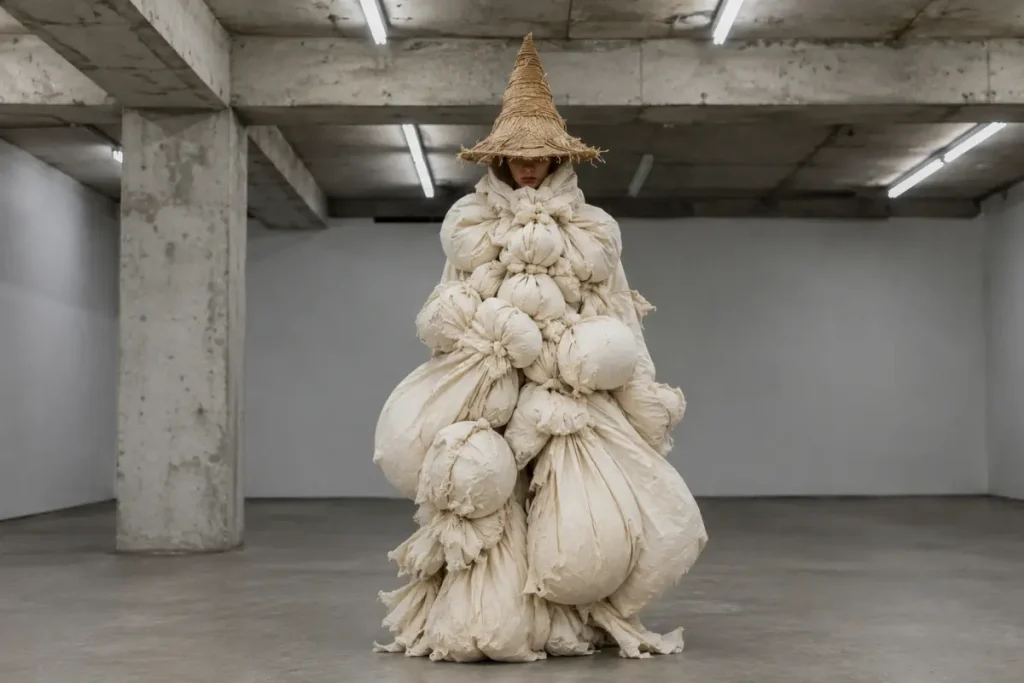
This Spring/Summer 2026 collection was presented in October 2025 during Paris Fashion Week. Kawakubo has dubbed it “After the Dust.
She wrapped burlap and calico and other common fabrics into enchanting delights, sometimes layered with cone-shaped hats, like hard ice cream scoops, she stacked them. The humble fabrics were invoked on the catwalk — stripped of hierarchy, made sublime by intent — burlap, canvas and calico.
In her show notes, Kawakubo shares her belief that there is a positive and value in something that is broken or damaged, “perfect things”.
True, that is the complete collection as a single sentence. Beauty in the midst of broken places. Building a new hope from ruins. At 83 years of age, she still has new things to say on issues no one else is addressing.
The AW26 Collection — Ultimately Black
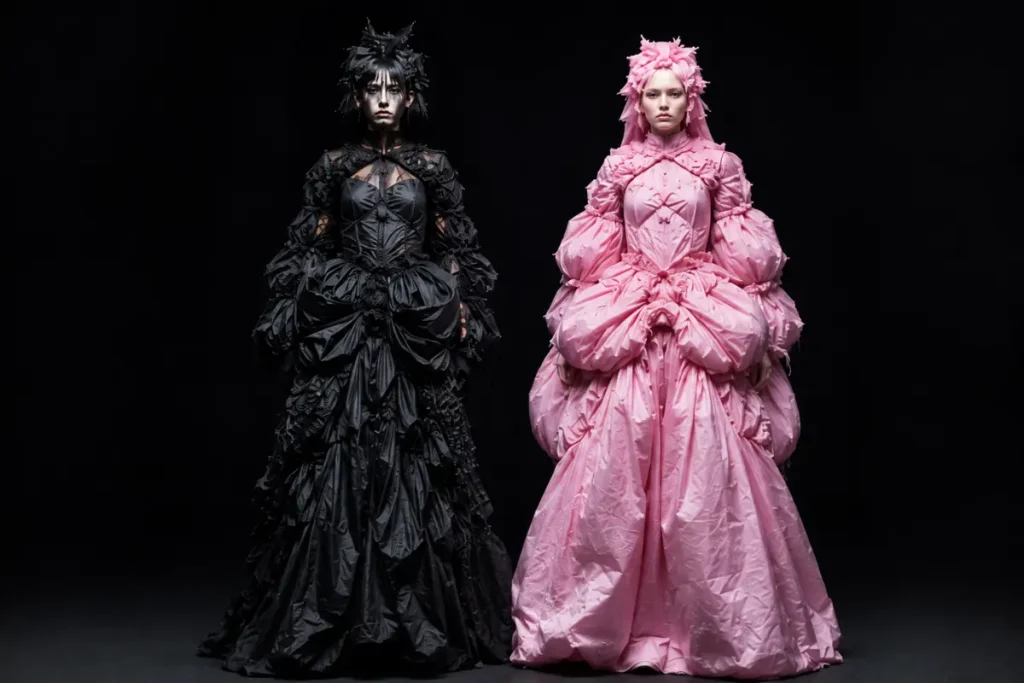
This Autumn-Winter 2026 womenswear event was one that has left things different.
The show began quietly with 16 elegant and all-black looks, representing what Kawakubo called “Ultimately Black,” a color she believes to be the ultimate means of rebellion and creation, and mirroring the Universe and the Black Hole.
Then it shifted.
The rest of the runway was filled with six looks that, however, were voluminous and clearly pink, opposing and contrasting the surrounding void — reinterpretations of earlier black looks. The embroidery is done in a way called shirring; ruching and spidery embroidery are done across the padded panels. Silhouettes that resembled terra-cotta tiles, judicial wigs, jellyfish, meteor trails.
A Comme fashion show is like going to church. Countless worship at its avant-garde creativity, which is the altar.Countless worship at its avant-garde creativity, which is the altar. Kawakubo’s work is created from the heart. There are no restrictions on anything.
Homme Plus SS26 — The Suit, Dismantled
The Comme des Garçons collection for 2016 spring was titled “Not Suits, But Suits” when it hit Paris Fashion Week.
Kawakubo’s vision detracts from the rigidity of the suit and makes it a more dynamic, almost sculptural form. There are exaggerated hips, panniered shapes, layered volumes which are all manipulating the form, and replacing the corporate smoothness with a sense of mutation, armour-like protection.
Slim trousers that zip up to make a skirt. Flower-colored jackets, ruffled at the bottom, were candy-colored. Torn and restructured knitwear over pleated men’s shirts and kilts.
It’s not “menswear. This is men’s clothing that has been deconstructed and reconstructed, and is asking you what you think a suit should imply.
The Full CDG Universe — Every Sub-Label Explained
One sentiment captures the entire story of Comme des Garçons: absolute independence. Kawakubo surrounds herself with a sprawling network of sub-brands and designers, building a fashion family tree so complex that even industry experts stop and ask, “Just how many lines does this brand actually run?”
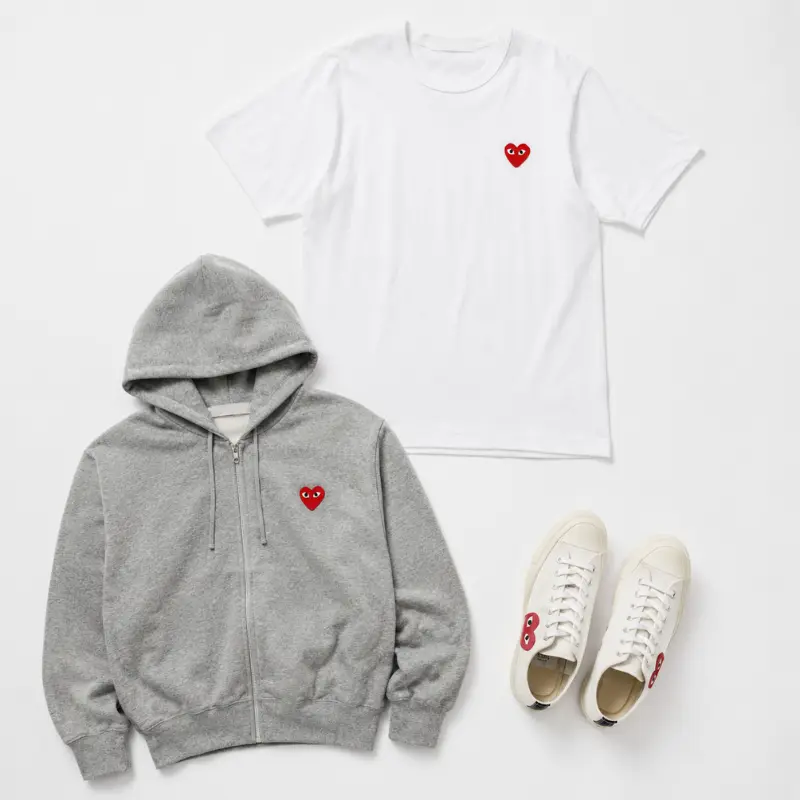
Here is the breakdown:
- Comme des Garçons PLAY — Launched in 2002. PLAY has earned its place as one of fashion’s most recognized names, built on a range of everyday wardrobe pieces that carry the signature wide-eyed heart logo created by artist Filip Pagowski. This is the entry point for most US buyers — covering CDG t-shirts, CDG hoodies, CDG cardigans, CDG long sleeves, and CDG polo shirts.
- Comme des Garçons Homme Plus: Founded 1984. Shown every season at Paris Fashion Week. The most experimental menswear line in the CDG universe — broken tailoring, cut-out construction, silhouettes that function more as sculpture than clothing.
- Comme des Garçons Homme: The original CDG diffusion line. Since 2003, Rei Kawakubo’s protégé Junya Watanabe has run the line as creative director. Look for Watanabe’s signature patchwork and mixed fabrics.
- Comme des Garçons Shirt: Premium shirting and tops. Sits between PLAY’s casual accessibility and the conceptual intensity of the main runway line.
- Noir Kei Ninomiya: All-black-and-white women’s sub-label launched in 2012. Architectural, avant-garde, and completely its own thing within the CDG universe.
- Comme des Garçons TAO: Tao Kurihara launched this line after stepping away from Tricot in 2021. She brings CDG’s structural precision together with feminine romanticism through embroidery, mesh, and hand-knitting.
The Heart That Made CDG Accessible to Everyone
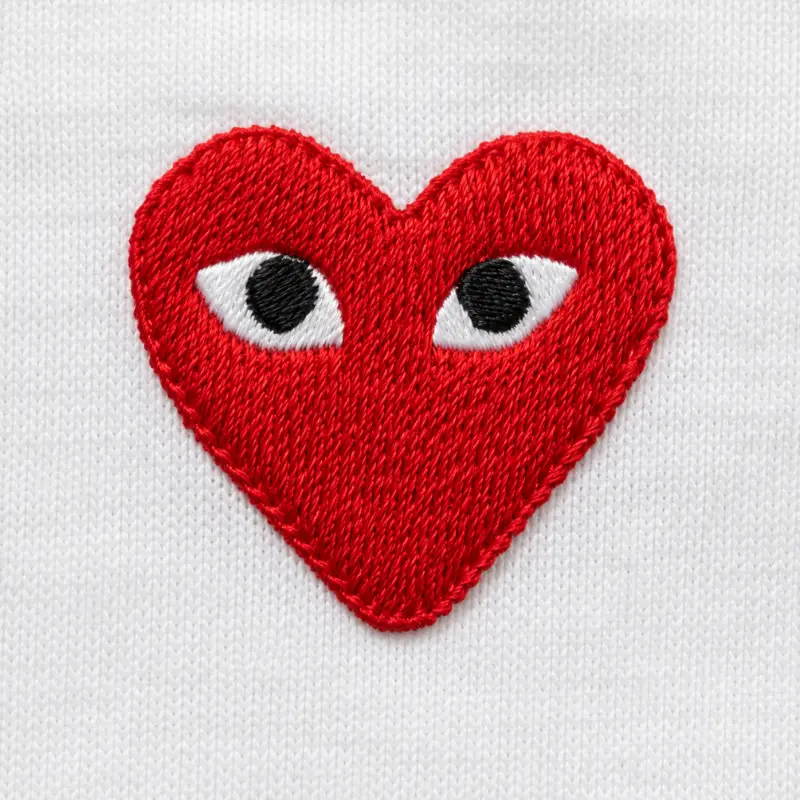
Polish artist Filip Pagowski drew the CDG heart. He manipulated it with purposeful flaws: the eyes were not perfectly round, and it had an organic form not created naturally by the machine.
Imperfection is the CDG philosophy put on display.
The heart logo is subtle, yet identifiable, and has come to serve as a sign of simple elegance, as opposed to intrusive branding. CDG places the heart directly on the side panel of every Converse pair. All the CDG Samba tongues. All PLAY hoodies, tees and cardigans.
These pieces are not decorated with the heart. It provides purpose and validation for them.
Why CDG Still Dominates in 2026
There are many brands that come and go. In comparison, the French outfit Comme des Garçons does not.
Comme des Garçons stays a top choice in 2026 because it never walks away from its roots. All collections are based on Rei Kawakubo’s vision. Sub-labels are linked with new customers. Partnerships help to maintain brand visibility.
CDG isn’t a hype drop or celebrity noise driven site. It’s based on consistency and respect. The brand is trusted by people with the concept of intelligence in clothing.
But don’t wear CDG for the sake of fashion; wear it as a sign of style and fashion sense, and of fashion historical awareness. Today, authenticity like that is a thing of the past in 2026. And rare things hold their value.
If My Eyes Aren’t on It, It’s Not Comme des Garçons
Kawakubo said to Dezeen: “If I’m not looking at it, it’s not Comme des Garçons.
That’s all of it, from the runway collections to the PLAY sub-label, the Dover Street Market stores all over the world, and all of the collaborations that get into us streetwear each season. As Kawakubo enters her eighties, she continues her rebellious streak by continually challenging the status quo, breaking out of the mold, and creating new ways of doing business and art.
The brand doesn’t operate in auto mode. Each choice makes its way through her eye.
Our Take
Unlike anyone else, Comme des Garçons didn’t ask permission to be.
“Who will do it if not us? — Rei Kawakubo.” That’s why every collection, every sub-label, every collab and every item sent to a US buyer who expects clothing to have a meaning beyond the season is driven by that question.
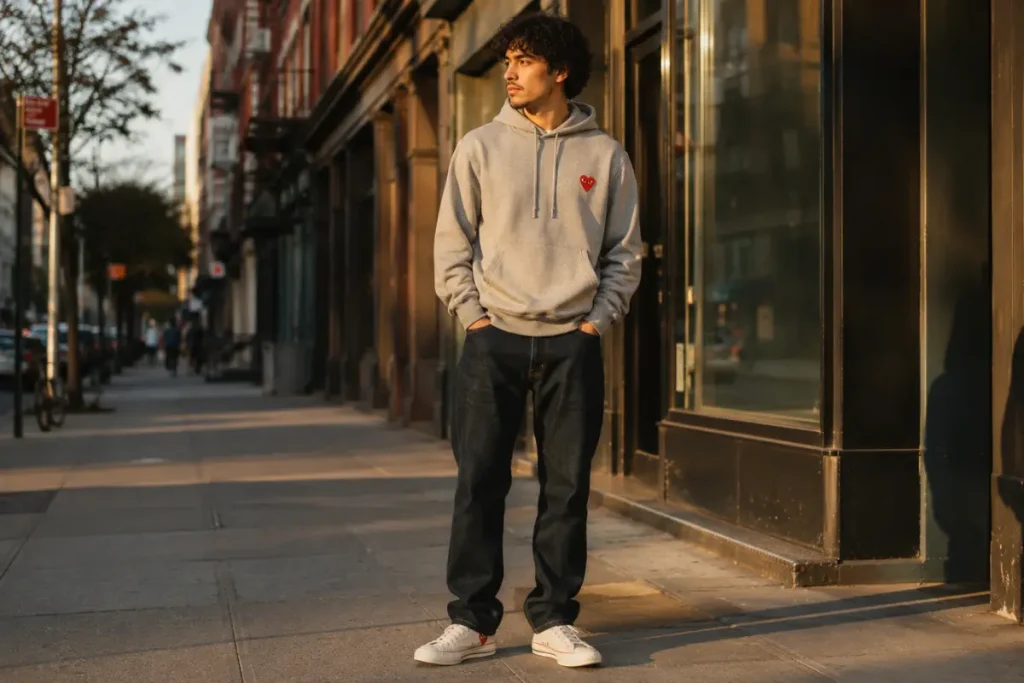
You are not purchasing a product; whether you are getting a CDG hoodie, a CDG t-shirt, a CDG cardigan, a pair of CDG Converse, or CDG Samba.
You are wearing a Presence.
Comme des Garçons original clothes are available with quick delivery to the United States at Comme des Garçons.
Frequently Asked Questions
What does Comme des Garçons mean?
The French word Comme des Garçons means “like boys. Rei Kawakubo’s selection of the name was an outright rejection of the typical notions about women’s clothing. Rei Kawakubo founded the brand in Tokyo in 1969, and despite its French name, it remains wholly Japanese at its core.
Who is the founder of Comme des Garçons?
Rei Kawakubo founded Comme des Garçons in Tokyo in 1969. She did not major in “Fashion Design” (may not even have known what it was, actually), but studied fine arts and literature, and has created the entire brand from a creative independence that has been free from all fashion conventions she came across on the way.
What is the latest Comme des Garçons collection in 2026?
The AW26 womenswear collection was presented at Paris Fashion Week in March 2026, with a theme of ‘Ultimately black’. Kawakubo began her collection of 16 all-black outfits with a jolt of six voluminous pink outfits to set herself apart from the rest of the black.
Is Comme des Garçons worth buying?
Yes — and the numbers say yes as well. CDG, to a large extent, maintains its resale value with better maintenance than anything of similar value on the market. It takes several years of hard use before the construction has to be updated and the design remains in step with the changing fads, with the brand never demeaning its creative sensibilities in order to sell more units.
Where can I buy authentic Comme des Garçons in the US?
Shop the full authentic Comme des Garçons collection — CDG hoodies, t-shirts, cardigans, long sleeves, polo shirts, CDG Converse, and CDG Samba — with guaranteed authenticity and fast shipping across the US.