
Blog
Comme des Garçons: Wearing Freedom, Not Following It

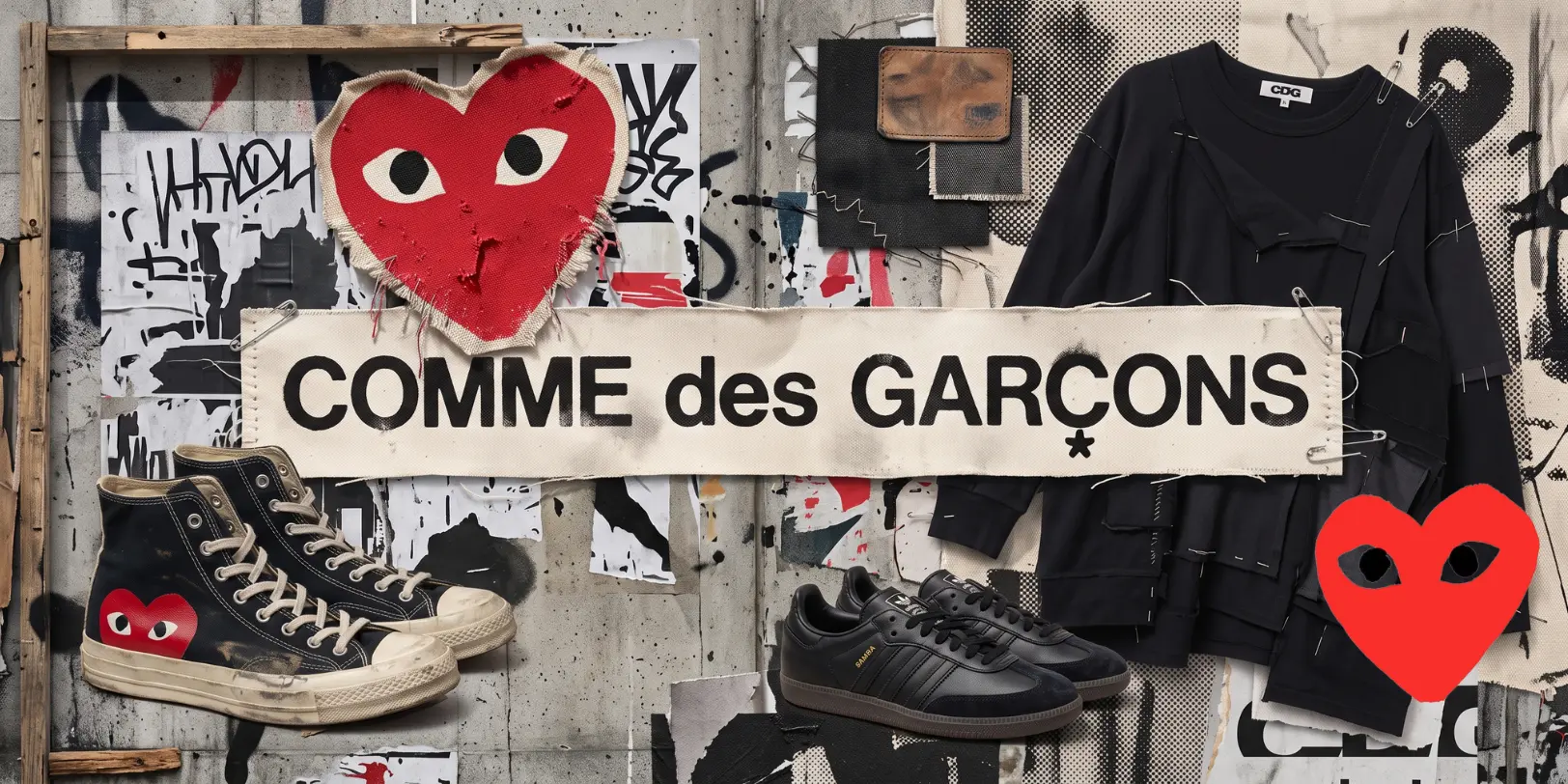
There’s an alternative way; you don’t have to be like everyone else,” Rei Kawakubo says, and that is what Comme des Garçons is all about, right? But she didn’t create a brand. She developed her refusal. A lack of flattery for her body, a lack of adherence to Paris rules when she wasn’t asked to play by them, a lack of clarification when she doesn’t need to clarify herself but she will make herself smaller. My goal is not to make clothes, she has said — and once you get that, it all makes sense when it comes to Comme des Garçons.
A Name That Was Never an Accident
Comme des Garçons is the name for Kawakubo’s belief that women shouldn’t be restricted to high heels or form-fitting clothing. It was translated into French (like boys), and she established a label around it at Tokyo in 1969. The name gave her a clue to her role as a “gender-busting” and “order-busting” agent. Most of the brands select a name that is appealing to them. Kawakubo selected it to make a statement, and she has been doing so for more than 50 years, and it hasn’t grown any more subdued.
The Education That Wasn’t Fashion at All
Kawakubo studied fine arts and literature at the Keio University in Tokyo, laying the groundwork in the theory of art and aesthetics that will guide her design philosophy for decades. She never formally studied pattern-cutting or how to make garments. She worked as a freelance stylist and had a full time job, teaching herself everything through love, determination and what little knowledge she was able to acquire here and there. That uneducated road liberated her from all of the rules a fashion school could have given her, and that’s what became the driving force in everything Comme des Garçons would be.
Paris, 1981 — The Show That Refused to Apologize
The first Japanese brand to make its debut on the Paris Fashion Week calendar, Kawakubo presented her first Paris collection back in 1981, a collection for the autumn/winter of ’82-’83, titled “Pirates. She came in with black as her main colour, disturbance in fabrics and asymmetry. Polish and proportion were the foundations of Paris’ identity, and Kawakubo lacked them. After giving up her previous references in 1979 and going back to square one, a consistent black palette, oversized silhouettes and asymmetry became hallmarks of her work. It was difficult for the critics to think of a word. Some used hard ones. All of them failed to alter the next thing she did.
Black as Resistance, Not Decoration
Black is the colour of “resistance”, Kawakubo tells us, and “Comme des Garçons” is the brand of resistance, in which Kawakubo has revolutionized the understanding of the colour throughout her oeuvre. Black is usually a default that most brands can go with, as it is said to be a safe option that matches with everything. For Kawakubo, it is a job. One of her mantras is “I hate symmetry” and Comme des Garçons clothing is knowingly designed to be asymmetric, with lengths of front and back often differing, and seams that defy traditional garment construction. That’s no accident. All the flaws in a CDG garment are intentional flaws put in by Kawakubo.
Clothes for the Mind, Not Just the Body
Kawakubo has said that she creates garments for the mind and not the body, and her creations are at the intersection of art, philosophy and rebellion. Beauty and ugliness, power and frailty, life and decay: she explores this dichotomy in all of her collections, and does not conceal flaws, she accentuates them. A torn seam is turned into a characteristic instead of a fault. It is in that philosophy that CDG hoodie or a CDG cardigan feels different in your hands than a piece from almost any other brand. It is intentional that the imperfection is there, not that it was made that way.
The Heart That Made Comme des Garçons Wearable
For decades, Comme des Garçons spoke to people who already understood fashion deeply. Then the brand built a bridge for everyone else. The CDG PLAY sub-label launched in the early 2000s, anchored by a single red heart with cartoon eyes designed by Polish artist Filip Pagowski — slightly irregular, deliberately imperfect, instantly recognizable. That heart now sits on the CDG hoodie, the CDG t-shirt, the CDG cardigan, the CDG long sleeve, and the CDG polo shirt, giving anyone the chance to wear Kawakubo’s philosophy without needing a fashion degree to understand it first.
Genderless Before It Had a Name
Kawakubo has never been fascinated with the idea of fashion in gender boxes. Her collections have never been compartmentalized as menswear, womenswear, and in the beginning proved to be garments that were neutral, expressive and human, instead of being categorized. Philosophically she’s not a “size-ist” and creates clothes that have an open volume that conforms to the wearer’s shape. As early as the 1980s, when gender-bending was not yet a fad in the fashion world, Kawakubo had already developed her entire brand around the idea that clothes should exist for the wearer, not for the category others gave them.
The Collaborations That Carried the Spirit Forward
Kawakubo’s most popular and successful collaboration is widely considered her partnership with Converse — among the designs in the Play line, the customized Chuck Taylor All-Star has become a defining highlight. That partnership lives on today through CDG Converse, available in both High Top and Low Top formats. The CDG x Adidas Samba collaboration extends that same spirit into one of the most culturally dominant sneaker silhouettes of the last decade. Each collaboration follows the same rule Kawakubo has held to since 1981 — partner with brands that share creative ambition, never with brands chasing visibility alone.
Still Rebelling at 83
Today, in her 80s, Kawakubo still carries the rebellious spirit of the early days, and continues to raise eyebrows, defy expectations and explore new avenues of artistic expression. In Fall/Winter 2026–27, her line once again came back to what he calls her “hallmark of taking a more black approach. She has always been moving at breakneck speed to reinvent herself and she has never once given a justification to anyone wanting a pat answer. When it comes to being new and powerful, stirring the hearts of people and moving forward, she’s accomplished just that – again and again, decade after decade, collection after collection.
Why People Wear Comme des Garçons
“The spirit of Comme des Garçons is a means of expression for anybody,” Kawakubo has said. “It’s not about buying the clothing but knowing that there is an alternative.” That single idea is why people return to this brand year after year. A CDG hoodie is not just a sweatshirt. A pair of CDG Converse is not just a sneaker. Every piece carries the same quiet argument Kawakubo has made since 1969 — that you do not have to follow the shape everyone else expects you to take. Google.
Our Take
Comme des Garçons never asked to be understood by everyone, and that refusal is exactly why it has lasted over 50 years while trend-driven brands rise and disappear around it. Kawakubo stated that people express their identities through their clothing. “I want people to feel something and think about who they are.” Whether you start with a CDG t-shirt, a CDG hoodie, a CDG cardigan, or a pair of CDG Converse, you are not buying a logo. You are wearing 50 years of someone refusing to apologize for thinking differently. Shop the full authentic Comme des Garçons collection with fast US shipping at commeedesgarcons.us.
Frequently Asked Questions
What does Comme des Garçons mean?
Comme des Garçons translates from French to “like boys.” Rei Kawakubo chose the name to reflect her rejection of expectations placed on how women should dress, and to signal her broader mission of challenging gender boundaries in fashion.
Who founded Comme des Garçons?
Rei Kawakubo founded Comme des Garçons in Tokyo in 1969. She studied fine arts and literature, not fashion design, and built the brand entirely through self-taught instinct and a refusal to follow existing fashion conventions.
Why does Comme des Garçons use so much black?
Kawakubo treats black as the color of resistance rather than a neutral default. It became the brand’s defining trademark and reflects her broader design philosophy of challenging convention through every choice she makes, including color.
What is CDG PLAY?
CDG PLAY is the sub-label that brought Comme des Garçons’ philosophy into accessible streetwear. Anchored by the red heart logo designed by Filip Pagowski, it covers hoodies, t-shirts, cardigans, long sleeves, and sneaker collaborations.
Where can I buy authentic Comme des Garçons in the US?
Shop the full authentic Comme des Garçons collection — including CDG hoodies, t-shirts, cardigans, CDG Converse, and CDG Samba — with fast US shipping at commeedesgarcons.us.